
Mississippi Prison refers to the state-level correctional system that holds people after a court sentence. It plays a key role in inmate custody and long-term confinement across correctional facilities in the state. Many people search Mississippi Prison to get basic facts about how detention works after conviction. In the middle of this system sits the wider Mississippi jail system, which supports early detention and court-related holding. This connection explains why people may move between jails and prisons during the detention process. The goal of this section is to share clear, factual context in simple language.
Mississippi Prison is often confused with local jails, even though both serve different purposes. Prisons in Mississippi handle long-term custody, security levels, and structured daily routines. Jails, by contrast, manage short stays linked to arrests or court cases within the Mississippi jail system. This difference matters for families, researchers, and the general public seeking accurate information. By placing Mississippi Prison at the center of the explanation, readers gain a clearer picture of how correctional facilities operate. All information here supports awareness and public education only.

Mississippi Correctional System
The Mississippi correctional system manages people placed in state custody after criminal sentencing and follows a clear path from arrest to supervision in the community. It connects courts, local jails, state prisons, and parole services into one continuous structure. The Mississippi correctional system sits within the broader criminal justice system Mississippi residents encounter through courts and law enforcement. It controls how offenders move through custody, supervision, and release, using state law and local authority roles that work side by side.
How Incarceration Works in Mississippi
The process begins once law enforcement makes an arrest and a court files formal charges. A person usually enters a county or city jail during early case stages, where judges review bail and hearing schedules. Jails hold people short term, so stays often last days or months rather than years.
After conviction, sentencing determines the next step. Short sentences stay at the local level, while longer terms move into state custody under the Mississippi Department of Corrections. This shift marks the point where prison intake, classification, and housing decisions take place.
Key incarceration stages include:
- Arrest and booking by local police or sheriff offices
- Pretrial detention in county jail
- Court conviction and sentencing
- Transfer to state prison for long-term confinement
State vs Local Authority Structure
Mississippi divides correctional responsibility between local governments and the state system. Counties and municipalities operate jails and manage detainees awaiting trial or serving short sentences. These facilities answer to local sheriffs and boards. The state controls prisons and long-term offender supervision. The Mississippi Department of Corrections oversees intake, housing, discipline, and release planning. It works with courts and parole boards to apply sentencing rules and supervision conditions.
A simple comparison helps clarify roles:
| Area | Local Authority | State Authority |
|---|---|---|
| Facility type | County or city jail | State prison |
| Sentence length | Short-term | Long-term |
| Oversight | Sheriff or county | MDOC |
| Supervision focus | Detention | Custody and reentry |
Sentencing Flow From Arrest to Parole
Sentencing in Mississippi follows a predictable path that links each agency together. Courts guide the process, then correctional agencies carry out the sentence through custody or supervision.
Standard sentencing flow:
- Arrest by law enforcement
- Jail detention during court proceedings
- Prison placement after felony sentencing
- Parole or post-release supervision for eligible offenders
Role of the Mississippi Department of Corrections (MDOC)
The Mississippi Department of Corrections manages state prisons and supervises offenders placed under state authority after sentencing. It handles custody, parole supervision, and probation services for people serving felony sentences in Mississippi. The Mississippi Department of Corrections sits at the center of state prison management and post-release supervision. Its role begins after courts issue a sentence and continues through incarceration, parole, or probation oversight within the state system.
Core Responsibilities of MDOC
MDOC carries out court-ordered sentences for felony cases placed under state control. It manages secure confinement, offender classification, daily operations, and release planning. These duties support public safety and structured offender supervision across Mississippi.
MDOC responsibilities focus on:
- Managing state prisons and correctional facilities
- Classifying offenders by security level and sentence type
- Providing probation services ordered by courts
- Overseeing parole supervision after release
State Prison Oversight and Management
State prison management remains a primary MDOC duty. The department operates and supervises facilities that house people serving longer sentences. It sets rules for housing, discipline, medical care coordination, and facility security. MDOC staff monitor compliance with state laws and correctional standards. Facility leadership reports through MDOC leadership, which keeps prison operations aligned across the state. This structure supports consistent custody practices from intake through release eligibility.
Parole and Probation Supervision
Parole supervision allows eligible offenders to serve part of their sentence outside prison under strict conditions. MDOC parole officers track compliance with court and parole board terms, such as reporting schedules and employment rules. Probation services apply to offenders sentenced directly to community supervision. Officers manage case files, conduct check-ins, and report violations back to courts. These services extend MDOC authority beyond prison walls and into supervised release.
Common supervision duties include:
- Monitoring behavior and compliance
- Coordinating with courts and parole boards
- Reporting violations or progress updates
What MDOC Does Not Control
MDOC authority does not extend to county or city jails. Local sheriffs and municipal agencies operate these facilities. They handle pretrial detention and short sentences, separate from state prison management. People often search MDOC inmate search tools expecting jail records. Those records remain under local control, not MDOC systems. This distinction helps users direct searches to the correct agency and avoid confusion within the criminal justice process.
What Local Authorities Oversee in Mississippi
The Mississippi jail system falls under local authority, not state control. County sheriffs and city police manage detention facilities that hold people before trial or during short sentences. Local detention plays a direct role in day-to-day custody across Mississippi. These facilities handle intake, holding, and release for people who have not entered state prison.
County Sheriff Responsibilities
County sheriffs oversee county jail Mississippi operations. These jails hold people arrested within county boundaries and those awaiting court action. They may house individuals serving brief sentences ordered by local courts. Sheriffs manage staffing, inmate safety, transportation, and daily jail functions. Budget support usually comes from county governments, which creates differences in capacity and services between counties.
Common county jail duties include:
- Booking and release processing
- Housing pretrial detainees
- Transporting inmates to court
- Maintaining records and custody logs
City Police Holding Facilities
Cities operate smaller holding facilities often called city jail Mississippi lockups. These locations hold people arrested by city police for short periods. Stays often last hours or a few days. City facilities focus on temporary custody rather than long-term housing. Once charges move forward, individuals transfer to county sheriff custody. This handoff keeps detention aligned with jurisdiction and court authority.
City police manage:
- Short-term holding after arrest
- Initial booking and paperwork
- Transfers to county jails
Regional Jail Agreements and Overcrowding
Some Mississippi counties rely on regional jail agreements. These agreements allow one county to house detainees for another. This approach helps manage space limits and staffing shortages. Overcrowding pushes counties to share detention resources. Regional use reduces pressure on smaller jails and supports sheriff custody obligations. It reflects how the Mississippi jail system adapts through cooperation rather than state control.
Key reasons for regional agreements include:
- Limited jail space
- Rising arrest volumes
- Budget or staffing limits
Types of Detention Facilities in Mississippi
Mississippi uses different detention facilities based on age, sentence length, and legal status. These facilities range from local jails to long-term state prisons and youth centers with restricted records. Each detention type serves a clear purpose within the justice structure. Knowing the differences helps people search records correctly and understand where custody decisions occur.
County Jails in Mississippi
County jails in Mississippi operate under sheriff jail custody. These facilities hold adults arrested within county limits or transferred from city police. Most people here wait for court action or serve short sentences. Sentence length usually stays under one year. Felony defendants remain here before transfer to state prison after sentencing. Daily operations fall under the elected county sheriff.
Who is held in county jails:
- Pretrial detainees awaiting hearings
- Misdemeanor offenders
- Felony defendants before prison transfer
City / Municipal Jails and Holding Facilities
A city jail Mississippi facility handles short-term detention after arrest by city police. These locations often include booking rooms or police holding cells rather than full housing units. Detention time stays brief, often under 72 hours. After booking, individuals move to county custody or release on bond. City police control intake and release during this window. Records remain limited since stays are short. Many cities do not publish online rosters. This setup reduces data storage and shifts longer custody to county systems.
Typical uses of municipal detention facilities:
- Initial arrest processing
- Temporary holding
- Transfer coordination
State Prisons in Mississippi
Prisons in Mississippi house people serving felony sentences longer than one year. These facilities fall under state authority and support long-term incarceration. A Mississippi state prison focuses on secure custody, classification, and sentence management. Intake includes risk assessment and housing placement based on offense type. One well-known example is Mississippi State Penitentiary (Parchman). It serves as a major long-term incarceration site within the state. Records for state prisons often appear in centralized offender databases.
Primary purposes of state prisons:
- Enforcing felony sentences
- Long-term housing
- Preparing offenders for parole review
Juvenile Detention Centers
Juvenile detention Mississippi facilities hold youth charged under juvenile law. These centers operate separately from adult detention and follow strict youth protection rules. Separation from adult inmates remains mandatory. Staff focus on safety, education coordination, and age-appropriate supervision within youth correctional facilities. Records stay restricted under confidentiality laws. Public access remains limited to protect minors and support rehabilitation goals within the juvenile justice system.
Reasons records remain restricted:
- Legal privacy protections
- Youth safety concerns
- Court confidentiality rules
How Inmate Searches Work in Mississippi
A Mississippi inmate search allows users to locate adults held in state prisons or under state parole supervision. The process relies on official MDOC tools and follows strict limits on what information is public. Mississippi inmate search tools provide practical guidance for families, legal professionals, and the general public. Knowing what each tool covers helps users find accurate information quickly and avoid confusion.
Statewide Inmate Search (MDOC)
The MDOC inmate locator is the official tool for searching offenders in Mississippi state prisons. Users can perform a Mississippi prison inmate lookup using a name or MDOC offender ID. This tool reflects real-time state custody records.
Official URL: https://www.ms.gov/mdoc/inmate/search
- Open the official MDOC inmate search page.
- Enter the inmate’s last name (first name optional).
- Add the MDOC offender ID if available for precise results.
- Apply optional filters like gender or race.
- Click Search to view results.
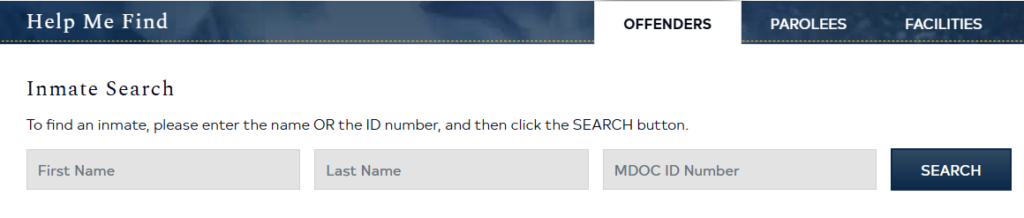
How to Read Results:
- Displays full name, MDOC ID, facility location, and custody status
- Clicking a name opens more details about parole eligibility and sentence
Information Included:
- Full legal name and known aliases
- MDOC offender ID number
- Facility name and location
- Sentence type, start date, and custody status
Information Excluded:
- Medical or disciplinary records
- County or city jail inmates
- Juvenile detention cases
- Sensitive personal information
Common Search Limitations:
- Newly transferred inmates may not appear immediately
- Multiple offenders with similar names may create broad results
- Misspellings or incomplete names can prevent accurate matches
What State Searches Include and Exclude
State prison records Mississippi databases focus on adult offenders under MDOC custody. This includes parole inmate information for those supervised outside prison.
Included in search results:
- Adults in state prison custody
- Active parolees and their status
- Custody location and classification
- Sentence start dates
Not included:
- County and city jail inmates
- Juvenile offenders
- Non-MDOC facilities
Offline Help via MDOC
MDOC also provides phone support for inmate location assistance if online searches are insufficient.
Requirements for phone assistance:
- Full legal name of the inmate
- Date of birth
- MDOC offender ID (if known)
Contact information:
- Phone: (601) 359‑5600
- Business hours: Monday–Friday, 8:00 AM–5:00 PM
County Jail Inmate Rosters in Mississippi
County jail rosters in Mississippi let users see who is currently in local custody. Each county manages its own records, so availability and accuracy vary widely. Understanding Mississippi county jail roster systems helps families, legal professionals, and the public locate inmates quickly. These tools focus on pretrial detainees and short-term offenders, not state prison inmates.
Online County Jail Rosters
Many counties provide public inmate rosters Mississippi online. These lists allow users to see recent bookings, charges, and release status. Popular examples include:
- Harrison County Jail inmate search
- Hinds County Jail roster
- Rankin County Jail lookup
How Rosters Are Updated:
- Most county systems update daily or multiple times per day
- Booking and release information may appear immediately or with a short delay
Data Typically Shown:
- Inmate full name and aliases
- Booking date and charges
- Bond or release information
- Housing location within the jail
Why Accuracy Varies:
- Smaller counties may update rosters less frequently
- High booking volumes can delay new entries
- Some counties limit the public information displayed for privacy reasons
If No Online Roster Exists
Some counties do not provide online jail rosters. In these cases, users must contact the sheriff’s office directly.
Contact County Jail Mississippi Guidance:
- Call or email the local sheriff’s office
- Provide inmate full legal name and date of birth
- Optionally include arrest date or booking number if known
What to Ask:
- Confirmation of current custody
- Facility location within the county jail
- Scheduled court appearances or release information
Why Some Counties Don’t Publish Data:
- Privacy concerns for inmates
- Limited staffing or technology in smaller counties
- Policies that restrict public access to bookings
City Jail Rosters & Short-Term Detention
City jail rosters in Mississippi provide information about individuals held in municipal or police detention facilities, usually for short-term stays. These lists differ from county and state rosters and may be more limited in detail. City detention facilities handle arrests and temporary holding before transferring individuals to county jails or releasing them. Understanding how these rosters work helps families and legal professionals verify custody efficiently.
Online City Detention Listings
Some larger cities maintain online city jail roster Mississippi listings, although availability is inconsistent. These rosters usually focus on short-term detainees arrested by municipal police.
Common examples include:
- Jackson city jail inmates — shows current bookings and temporary custody status
- Gulfport police detention — lists people held overnight or pending court transfer
- Biloxi jail holding — displays short-term inmates and release schedules
Data Typically Shown:
- Inmate name and booking date
- Arresting agency or charges
- Expected release or transfer details
Limitations:
- Short-term stays mean updates can be delayed
- Records may only be available for a few days
- Smaller cities may not publish any online roster
When City Rosters Are Not Public
Many smaller cities or municipalities do not provide online jail rosters. In these cases, verification must be done via direct contact.
Police Custody Verification Guidance:
- Call the city police department or municipal jail
- Provide the full legal name and, if known, the date of birth
- Ask for custody status, location, and expected release
Local Detention Confirmation:
- City authorities manage intake, temporary holding, and transfer to county facilities
- Short-term custody often means records are kept only internally and may not be shared online
VINELink & Custody Notifications in Mississippi
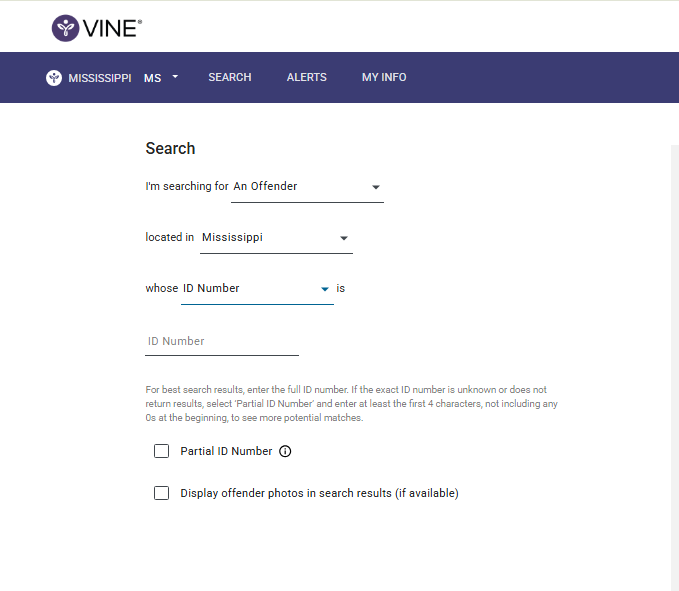
VINELink Mississippi allows users to receive real-time alerts about custody status changes for offenders in the state. This system is especially useful for families, victims, and legal professionals who want updates on transfers, releases, or other custody events. VINELink provides automated notifications through email, phone, or text whenever an offender’s status changes, helping users stay informed without checking inmate rosters constantly.
How VINELink Works
VINELink Mississippi is part of the nationwide victim notification system that tracks offenders across state correctional facilities. Once an offender is entered into the system, users can choose how they receive updates.
Key Features:
- Custody change alerts — notifications when an inmate is transferred, released, or recaptured
- Multiple delivery methods — phone calls, SMS text, or email alerts
- Anonymous registration — users do not need to disclose personal information publicly
- Available for state, county, and city-level inmates (where participating)
Step to Registration Process
Users can register for VINELink Mississippi notifications by following these general steps:
- Visit the official VINELink site: https://www.vinelink.com
- Select “Mississippi” from the state dropdown menu.
- Search for the offender: Enter full name and, if available, offender ID.
- Select the offender from the search results.
- Choose alert preferences:
- Delivery method (phone, email, or text)
- Type of notifications (transfer, release, custody status changes)
- Provide contact details for receiving notifications.
- Confirm registration: You may receive a verification email or text to activate alerts.
Public Records & Limitations
Public records in Mississippi provide access to inmate and jail data, but there are legal and practical limits to what can be shown. Understanding these restrictions ensures users rely on accurate and compliant information.
Access to Mississippi public records is governed by state law, balancing transparency with privacy and safety. While county and state rosters are publicly viewable, not all data is immediately available, and some information is legally protected. Users need to understand these nuances to avoid misinterpretation or reliance on incomplete data.
Data Delays
Inmate records are often not updated in real time. Newly booked inmates, transfers between facilities, or recent releases may take hours or days to appear in online rosters. County and city jails update their systems at different intervals, which can create temporary discrepancies in information. Users searching for timely custody updates should consider these delays.
Common reasons for delays include:
- Processing time after booking or release
- Administrative updates in local or state systems
- High volume of entries at busy facilities
Legal Restrictions
Mississippi law protects certain information from public disclosure. Juvenile records are always confidential, and sensitive inmate information, such as medical history, disciplinary records, or personal identifiers, is withheld. Some counties also limit the details of their jail rosters to protect inmate safety and comply with privacy regulations.
Examples of restricted information:
- Juvenile inmate records
- Health or medical data
- Disciplinary actions within facilities
- Certain personal identifiers for inmates
Importance of Verification
Because of data delays and legal restrictions, verifying inmate information directly with the appropriate authority is critical. This ensures users access the most accurate and up-to-date information. Verification is especially important for legal matters, family notifications, or official proceedings, as relying solely on online rosters can result in incomplete or outdated data.
Best practices for verification:
- Contact the county sheriff, city police, or MDOC for confirmation
- Provide inmate full name, date of birth, or booking number if known
- Cross-check multiple sources when possible
Frequently Asked Questions
Many people want to know how to find inmates, understand jail vs prison differences, and track custody changes in Mississippi. This FAQ answers the most common questions while targeting Mississippi prison FAQs, jail vs prison Mississippi, and inmate lookup questions.
Why is an inmate not in the search?
An inmate might not appear in an online search for several reasons. They could be held in a local county or city jail instead of a state prison, as online MDOC tools only cover state facilities. Juveniles are never listed due to strict confidentiality laws. Newly booked or recently transferred inmates may take several days to appear in the system. Spelling mistakes, missing first names, or incorrect ID numbers can also prevent accurate results. Additionally, administrative errors or delays in data entry may temporarily hide the inmate from search results.
What’s the difference in Jail or Prison?
Jails and prisons in Mississippi serve different purposes. Jails are operated by county sheriffs or city police and primarily hold inmates temporarily, either pretrial or serving short sentences under one year. Prisons are state-managed by MDOC and house offenders serving long-term felony sentences. Jails often have less security, fewer programs, and are focused on short-term containment, while prisons provide long-term incarceration, rehabilitation programs, and structured supervision. Understanding this difference is crucial when searching for an inmate.
How long before an inmate is transferred?
The time it takes to transfer an inmate varies depending on several factors. Transfers depend on space availability in the receiving facility, court orders, and administrative processing by MDOC or local jails. Typically, inmates are moved within one to seven days after sentencing or booking, but delays can occur due to high facility occupancy, holidays, or paperwork processing. Transfers can also include movement between local, regional, or state facilities depending on sentence type.
Can I see parole or probation online?
Parole or probation information is available for offenders under state supervision through MDOC’s inmate search. This includes release eligibility, parole supervision status, and sometimes the facility assigned. County and city inmates generally do not have parole or probation info online. Juvenile records are never displayed due to confidentiality laws. Users should note that this information is updated periodically and may not reflect immediate changes in custody status.
Why don’t all counties provide online jail rosters?
Some Mississippi counties do not maintain online jail rosters due to limited staffing, outdated technology, or privacy concerns. Smaller counties may only track inmate information internally, and releasing online data could violate privacy regulations. In these cases, the sheriff’s office or municipal police department must be contacted directly to verify custody status. Some counties also restrict online data to protect inmates, staff, and public safety.
How can I verify custody if the search fails?
If an inmate does not appear online, verification requires contacting the relevant sheriff’s office or city police department. Providing the inmate’s full legal name, date of birth, and booking number, if available, allows staff to confirm custody status. They can provide details about the current facility, expected release dates, court schedules, and transfer status. This method ensures accurate and up-to-date information when online searches are insufficient.